

Thermally Conductive Electromagnetic Wave Absorbing Materials
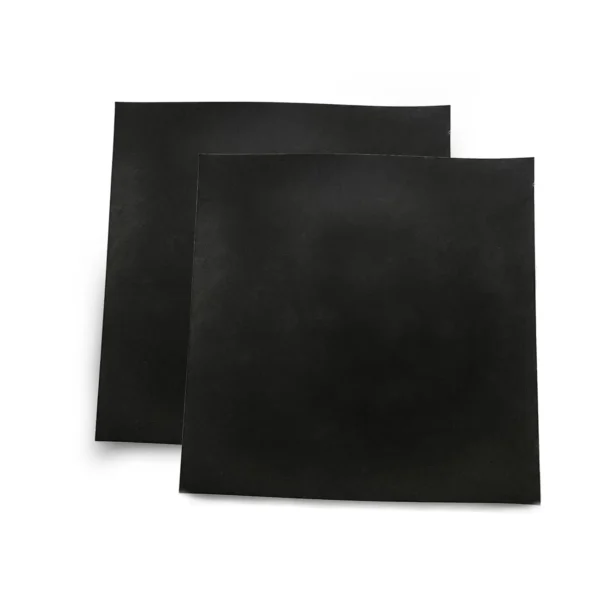
Sheen MSF series electromagnetic wave absorbing materials are soft magnetic materials made by mixing, dispersing, and compressing micron-sized flaky iron-based alloy powder with silicone rubber. They possess excellent electromagnetic wave absorption capabilities, effectively suppressing electromagnetic interference between IC chips, antennas, and other signal sources, as well as between components such as heat sinks and enclosures. Among them, MSF-150 and MSF-500 have unique thermal conductivity properties.
Thermally conductive and electromagnetic wave absorbing materials combine the functions of heat conduction and electromagnetic wave absorption, demonstrating their potential application value in various industries. These materials can simultaneously conduct heat and absorb electromagnetic waves, thus playing a crucial role in critical fields such as electronic communications, aerospace, and medical equipment, attracting widespread research and application interest.
Thermally conductive and electromagnetic wave-absorbing materials are typically composed of a combination of thermally conductive and wave-absorbing materials, possessing dual functionality. Compared to traditional thermally conductive materials, these materials play a crucial role in reducing electromagnetic interference and improving the heat dissipation performance of electronic devices, thus holding extremely important value in both research and applications.
Product Features
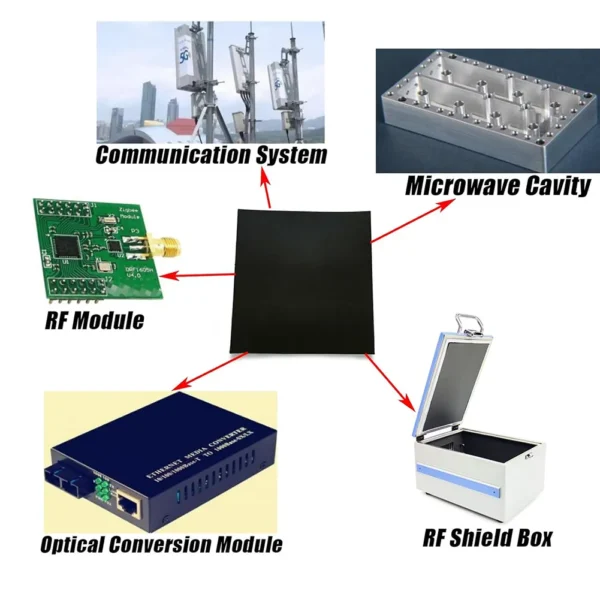
In the electronic communications industry, thermally conductive and electromagnetic wave-absorbing materials are widely used in the manufacture of key components such as antennas, filters, and shielding covers.
The use of this material can significantly reduce electromagnetic interference, thereby improving the quality and reliability of communication. In the aerospace field, thermally conductive and electromagnetic wave-absorbing materials are used to construct the casings of aircraft and satellites to effectively shield against electromagnetic radiation and enhance the equipment’s anti-interference capabilities.
Furthermore, in the medical device industry, this material is used to manufacture the casings of medical equipment to reduce the impact of electromagnetic radiation on the human body and ensure the safety of equipment use. These applications demonstrate the importance and versatility of thermally conductive and electromagnetic wave-absorbing materials in multiple fields.
Features
| Model | Thickness(mm) | Standard application frequency bands(GH) | Optimal frequency band for application(GHz) |
|---|---|---|---|
| MSF-S-025 | 0.25 | 22-40 | 30-40 |
| MSF-S-050 | 0.5 | 2-18 | 8-18 |
| MSF-S-070 | 0.7 | 2-18 | 10-12 |
| MSF-S-090 | 0.9 | 2-18 | 11-16 |
| MSF-S-100 | 1.0 | 2-22 | 12-30 |
| MSF-S-100J | 1.0 | 2-18 | 6-10 |
| MSF-S-130 | 1.3 | 2-18 | 8-12 |
| MSF-S-150 | 1.5 | 2-18 | 6-12 |
| FMSA-S-180 | 1.8 | 2-18 | 4-12 |
| MSF-SC-100 | 1.0 | 0.5-18 | 0.5-2 |
| MSF-SC-180 | 1.8 | 2-18 | 5-9 |
| MSF-SC-200 | 2.0 | 2-18 | 3-5 |
| MSF-SC-250 | 2.5 | 2-18 | 2-4 |
| MSF-SC-300 | 3.0 | 0.5-18 | 0.5-3 |
| MSF-SM-030 | 0.3 | 60-80 | 70-80 |
| MSF-SM-050 | 0.5 | 15-70 | 50-70 |
| MSF-SM-060 | 0.6 | 15-50 | 30-50 |
| MSF-SM-080 | 0.8 | 18-40 | 22-40 |
| MSF-SZ-200 | 2.0 | 2-18 | 10-13 |
| MSF-SZ-400 | 4.0 | 0.1-18 | 0.1-4 |
| MSF-SF-150 | 1.5 | 2-18 | 8-18 |
| MSF-SF-200 | 2.0 | 2-18 | 8-18 |
| MSF-SQ-200 | 2.0 | 2-18 | 10-14 |
| MSF-SP-1000 | 10 | 0.5-10 | 0.5-2 |
| Model | MSF150 | MSF500 |
|---|---|---|
| Thickness (mm) | 0.5-5.0 | 0.5-5.0 |
| Hardness (Shore 00) | 60±5 | 60±5 |
| Density (g/cm³) | 4.1±0.3 | 4.1±0.3 |
| Thermal conductivity (W/m·K) | 1.5 | 3.0 |
| Flame-retardant rating | V-0 | V-0 |
| Operating temperature(°C) | -40-175 | -40-175 |
| Tensile strength (psi) | 40 | 40 |
| Stretch ratio | 50% | 40% |
| Compression ratioa 1mm,@30psi | 30% | 40% |
| Volume resistivity(Ω·cm) | 1.9*10^9 | 3.9*10^12 |
| Dielectric strength(kV/mm) | 0.01 | 0.01 |
| Thermal resistance(°C*in²/W)1mm,@30psi | 0.08 | 0.6 |
Principles of Thermal Interface Material
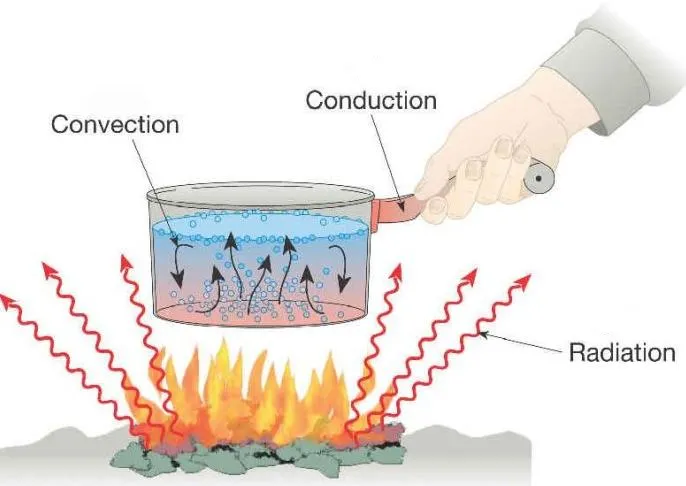
1. There are three modes of heat transfer: conduction, convection, and radiation.
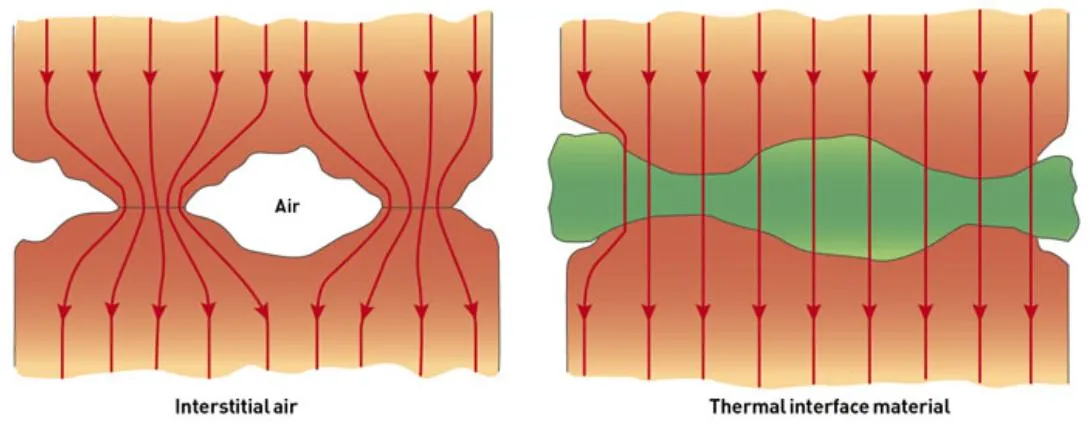
2. When a chip is directly bonded to a heatsink, there exists a microscopic gap between the two interfaces. The thermal conductivity of the air in this gap is only 0.026W/m·K, which hinders heat conduction.
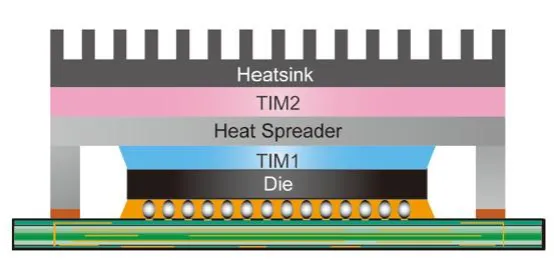
3. Thermal Interface Materials are used to fill the gaps between heat-generating components and heatsinks, eliminating the air at the interface and efficiently conducting heat.
Currently, SHEEN's SF series of Silicone Thermal Pad can achieve a thermal conductivity of 15W/m·K.
2. When a chip is directly bonded to a heatsink, there exists a microscopic gap between the two interfaces. The thermal conductivity of the air in this gap is only 0.026W/m·K, which hinders heat conduction.
3. Thermal Interface Materials are used to fill the gaps between heat-generating components and heatsinks, eliminating the air at the interface and efficiently conducting heat.
Currently, SHEEN's SF series of Silicone Thermal Pad can achieve a thermal conductivity of 15W/m·K.
Thermal Interface Material(TIM)