Non-Silicone Thermal Pad 6.0W/mK
AF600G 6.0 W/m·K Silicone-free thermal pads are free from siloxane and the risk of silicone oil bleed, effectively preventing risks such as mirror fogging and electrical failures. These pads boast excellent tensile strength and abrasion resistance. Ideal for use in sensors, AI data centers, security cameras, and medical equipment.
The SHEEN’s AF Series Silicone-free Thermal Pads (Non-silicone Thermal Pads) are renowned for their distinctive characteristics, which include:
◆ Good thermal conductivity, with options ranging from 1.0 to 8.0 W/m·K.
◆ Available in various thicknesses from 0.5 to 5.0 mm.
◆ Free from siloxane and the risk of silicone oil bleed.
◆ Self-adhesive for easy application and rework.
◆ Exceptional tensile strength and abrasion resistance.
◆ Customizable die-cut shapes to meet specific customer needs.
◆ Excellent electrical insulation properties.
◆ Superior flame resistance, achieving a UL94 V-0 rating.
◆ Complies with RoHS, Halogen-Free, and REACH environmental and safety standards.
◆ Good thermal conductivity, with options ranging from 1.0 to 8.0 W/m·K.
◆ Available in various thicknesses from 0.5 to 5.0 mm.
◆ Free from siloxane and the risk of silicone oil bleed.
◆ Self-adhesive for easy application and rework.
◆ Exceptional tensile strength and abrasion resistance.
◆ Customizable die-cut shapes to meet specific customer needs.
◆ Excellent electrical insulation properties.
◆ Superior flame resistance, achieving a UL94 V-0 rating.
◆ Complies with RoHS, Halogen-Free, and REACH environmental and safety standards.
【Applications】
◆ Data Center
◆ Automotive sensors
◆ AI devices
◆ Fiber optic communication systems
◆ Industrial control equipment
◆ Hard disk drives
◆ Medical devices
Properties
| Properties | Unit | AF600G | Test Method |
|---|---|---|---|
| Color | – | White/Gray | Visual |
| Thermal Conductivity | W/m·K | 6.0 | ASTM D5470 |
| Thermal Impedance (1mm,@30psi) | ℃*in2/W | 0.25 | ASTM D5470 |
| Thickness | mm | 0.5 ~ 2.0 | ASTM D374 |
| Standard Hardness | Shore 00 | 70±8 | ASTM D2240 |
| Elongation | % | 50 | ASTM D412 |
| Tensile Strength | psi | 30 | ASTM D412 |
| Compressibility (1mm,@30psi) | % | 20 | – |
| Density | g/cm3 | 3.1 | ASTM D792 |
| Dielectric Strength (@AC) | kV/mm | > 8 | ASTM D149 |
| Dielectric Constant (@1MHz) | – | 9.0 | ASTM D150 |
| Volume Resistivity | Ω·cm | 1*1013 | ASTM D257 |
| Operating Temp. | °C | -40 ~ 120 | – |
| Flame Rating | – | V-0 | UL94 |
| RoHS | – | PASS | IEC 62321 |
| Halogen | – | PASS | EN 14582 |
| REACH | – | PASS | EN 14372 |
Principles of Thermal Interface Material
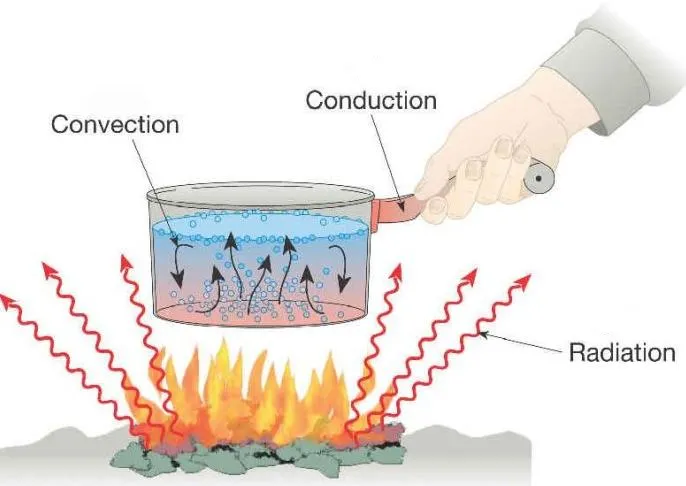
1. There are three modes of heat transfer: conduction, convection, and radiation.
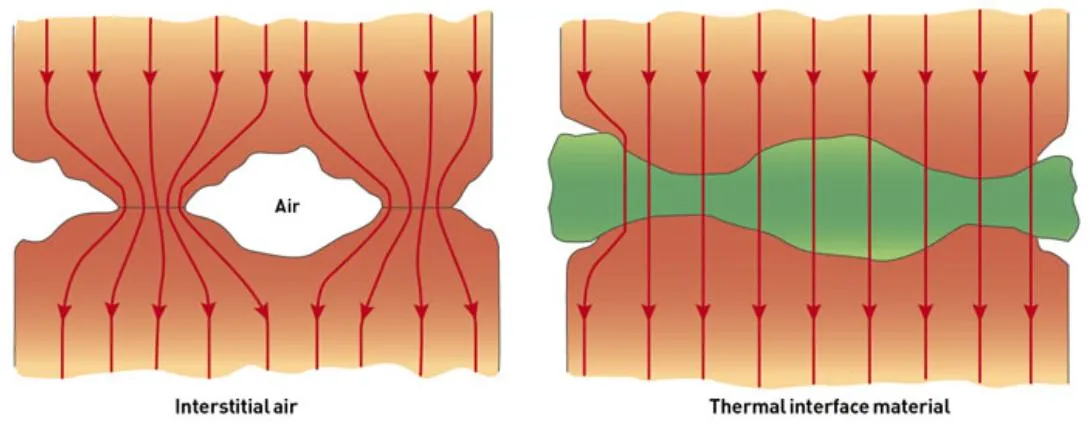
2. When a chip is directly bonded to a heatsink, there exists a microscopic gap between the two interfaces. The thermal conductivity of the air in this gap is only 0.026W/m·K, which hinders heat conduction.
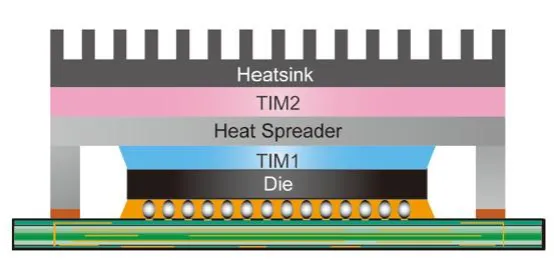
3. Thermal Interface Materials are used to fill the gaps between heat-generating components and heatsinks, eliminating the air at the interface and efficiently conducting heat.
Currently, SHEEN's SF series of Silicone Thermal Pad can achieve a thermal conductivity of 15W/m·K.
2. When a chip is directly bonded to a heatsink, there exists a microscopic gap between the two interfaces. The thermal conductivity of the air in this gap is only 0.026W/m·K, which hinders heat conduction.
3. Thermal Interface Materials are used to fill the gaps between heat-generating components and heatsinks, eliminating the air at the interface and efficiently conducting heat.
Currently, SHEEN's SF series of Silicone Thermal Pad can achieve a thermal conductivity of 15W/m·K.
Thermal Interface Material(TIM)