How to Choose the Right Thermal Interface Materials Manufacturer for You
When millions ride on your circuitry, picking the right thermal interface materials manufacturer isn’t casual—choose wrong and watch profits melt.

When millions ride on your circuitry, picking the right thermal interface materials manufacturer isn’t casual—choose wrong and watch profits melt.
You don’t just pick a thermal interface material manufacturer the way you’d grab a pack of gum at checkout. This is about ensuring your components don’t fail under pressure—or worse, fail in front of millions. One misstep and suddenly it’s recall season.
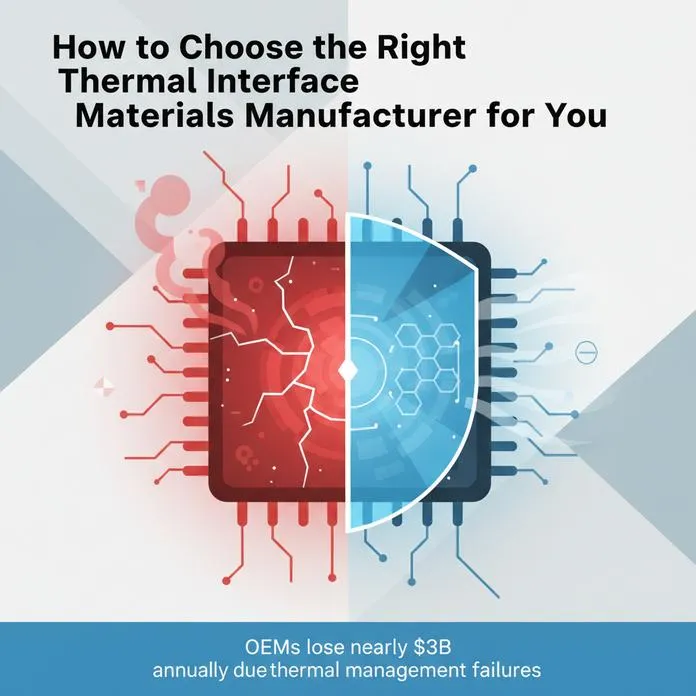
“OEMs are losing nearly $2 billion annually due to thermal management failures,” says Jon Peddie Research. Not exactly pocket change for skipping fine print on spec sheets or trusting the wrong supplier handshake.
So before someone from QA comes storming into your office holding a melted PCB like it’s Exhibit A, let’s talk about how to spot the right partner—before things get hot.

Essential Insights for Choosing a Thermal Interface Materials Manufacturer
➔ Material Types: Select the right thermal interface material—thermal paste, pads, epoxies, or greases—based on performance and application needs.
➔ Electrical Safety: Opt for materials with effective electrical insulation to mitigate risks of short circuits and enhance safety.
➔ Industry Compliance: Ensure the manufacturer complies with RoHS and other relevant standards to guarantee safety and reliability.
➔ Packaging Choices: Assess whether syringes, bulk containers, or custom packaging suits your project scale and application precision.
➔ Thermal Conductivity: Prioritize materials with higher thermal conductivity for improved heat transfer efficiency.
➔ Reliability Factors: Choose materials that demonstrate high reliability to maintain performance over time and under varying conditions.
➔ Temperature Range: Confirm that selected materials can operate efficiently within your specific application’s temperature range.
➔ Certifications: Do not overlook IPC standards and other certifications to ensure quality and reliability in thermal interface materials.
➔ Collaborative Communication: Evaluate the ease of collaboration and communication with the manufacturer for timely solutions and support.
➔ Long-Term Commitment: Assess vendor reliability and their commitment to maintaining supply for long-term partnerships.
Factors to Consider When Choosing a Thermal Interface Materials Manufacturer
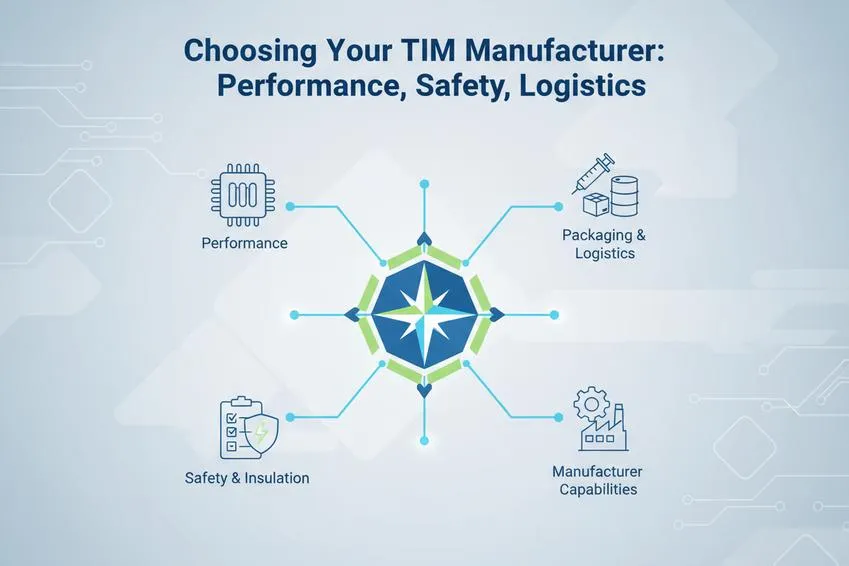
Picking the right thermal interface materials manufacturer isn’t just about specs—it’s about safety, performance, and smart logistics.
Selecting the Right Thermal Paste for Performance
- High thermal conductivity is key when you’re moving heat from a CPU or GPU to a heatsink.
- Viscosity matters—too thick, and it won’t spread well; too thin, and it’ll leak.
- Some prefer thermal grease, others go with pads or even epoxy adhesives, depending on the device setup.
- For serious overclockers or industrial gear, the best thermal paste can make all the difference between overheating and smooth sailing.
- Always match your application method with the material type—precision matters.
Understanding Electrical Insulation for Optimal Safety
When working with electronics, you don’t want any surprises—especially electric ones. Good insulation isn’t optional; it’s essential.
A solid thermal interface materials manufacturer should offer products with proven dielectric strength, tested against voltage breakdowns that could fry your whole system. Whether you’re using silicone-based gap fillers, insulating thermal pads, or low-conductivity greases, each choice must meet strict safety standards like those set by UL certification bodies.
You’re not just managing heat—you’re protecting circuits from disaster.
Industry Standards: Why RoHS Compliance Matters
Choosing a compliant supplier means fewer headaches down the line:
• RoHS compliance ensures that your materials are free from banned substances like lead, mercury, cadmium, and PBBs/PBDEs—bad news in any build environment • Look out for WEEE alignment too—it’s not just about product performance but end-of-life responsibility • A truly reputable thermal interface materials manufacturer will have documentation ready before you ask
If you’re working in medical devices, automotive systems, or aerospace tech? Non-compliance isn’t just risky—it’s illegal.
Packaging Options: Syringes vs. Bulk Containers for Efficiency
- Syringes are best when you need small amounts with pinpoint accuracy—think repair shops or R&D labs.
- Bulk containers shine in automated production lines where volume rules and waste must be minimized.
- Shelf life varies between formats—a sealed syringe might last longer unopened than an exposed bulk tub.
- Evaluate storage conditions before buying; even top-tier thermal grease degrades if improperly stored.
The right packaging keeps costs down while keeping application quality up.
Balancing Application Volume with Material Type
Some projects demand ounces at a time; others need drops:
Short runs? Go with single-use syringes preloaded with high-viscosity pastes that don’t dry out mid-job.
Large-scale production? Drum-fed dispensers paired with low-resistance greases give better throughput—and less mess on your floor.
Between these extremes lies hybrid usage: field engineers often carry both formats depending on client needs and the equipment types they service daily.
Smart buyers know their use case before placing an order—and so should your supplier.
Evaluating Manufacturer Capabilities Beyond Specs
Not all manufacturers walk their talk:
• A good one offers custom formulations tailored to unique thermal loads—not just off-the-shelf options • They’ll provide test data on parameters like electrical conductivity, viscosity range, and operating temp thresholds • Ask about support services too—some offer training on how to apply their specific compounds properly
And yes—check if they’ve worked across industries like telecom or automotive—that kind of cross-sector experience often leads to smarter solutions under pressure.
So, when sizing up a potential partner in heat management? Don’t stop at datasheets—dig deeper into what makes them reliable beyond numbers alone.
By taking all this into account—from material science to packaging design—you’re far more likely to land on a dependable thermal interface materials manufacturer who gets both performance and practicality right every time.
The Importance of Quality in Thermal Interface Materials
A solid thermal interface starts with quality—without it, even the best system can overheat or underperform.
Evaluating Thermal Conductivity: What You Need to Know
Thermal conductivity isn’t just a number—it’s the heartbeat of your cooling strategy. Here’s how different materials stack up when it comes to moving heat efficiently:
| Material Type | Avg. Thermal Conductivity (W/m·K) | Typical Use Case | Relative Cost |
|---|---|---|---|
| Silicone-based Grease | 3–5 | CPUs, GPUs | Medium |
| Graphite Sheet | 150–500 | Power modules | High |
| Phase Change Material | 2–8 | Laptops, mobile devices | Low |
| Metal TIMs | >80 | High-performance servers | Very High |
Short takes on what this means:
- Higher thermal conductivity = better heat transfer.
- Don’t ignore thermal resistance; low resistance improves overall performance.
- Always check if your material meets standard test standards like ASTM D5470.
- A credible thermal interface materials manufacturer will provide verified lab data.
High Reliability: Ensuring Consistent Performance Over Time
You want that TIM to work just as well after three years as it did on day one. That’s where real reliability kicks in.
✔️ Start with proper reliability testing—think thermal shock, high humidity exposure, and mechanical vibration tests.
✔️ Look into how the material handles repeated thermal cycling. Some degrade fast when temps swing wildly.
✔️ Ask about long-term predictions based on accelerated aging studies and real-world simulations.
“According to Yole Intelligence’s Q1 2024 report, over 68% of electronics failures linked to overheating were traced back to degraded interface materials.”
🎯 So yeah—don’t cheap out here. A trusted thermal interface materials manufacturer knows their stuff when it comes to lifetime prediction and maintaining tight tolerances across batches.
Operating Temperature: Choosing Materials for Extreme Conditions
When the heat’s on—or cold—you need a TIM that won’t flinch.
🧊 For low-temp conditions:
- Choose products with excellent low-temp flexibility and no cracking risk.
- Check the minimum rated operating temperature, especially for aerospace use cases.
🔥 For high-temp environments:
- Look for strong thermal stability, often found in ceramic-filled greases or metal-based pads.
- Ensure max temp rating exceeds your peak system load by at least a 20°C buffer.
📌 Application-specific considerations: • Automotive ECUs? Pick something that handles -40°C to +150°C without phase separation. • Data centers? Focus more on sustained high-load operation at ~85°C ambient conditions. • Military-grade systems? Your TIM must stay stable across wide swings—from arctic chill to desert heat.
No matter what you’re building, matching your material’s full rated range with your actual usage profile is non-negotiable—and exactly what a seasoned thermal interface materials manufacturer should guide you through.
4 Common Mistakes in Choosing Thermal Interface Materials Suppliers
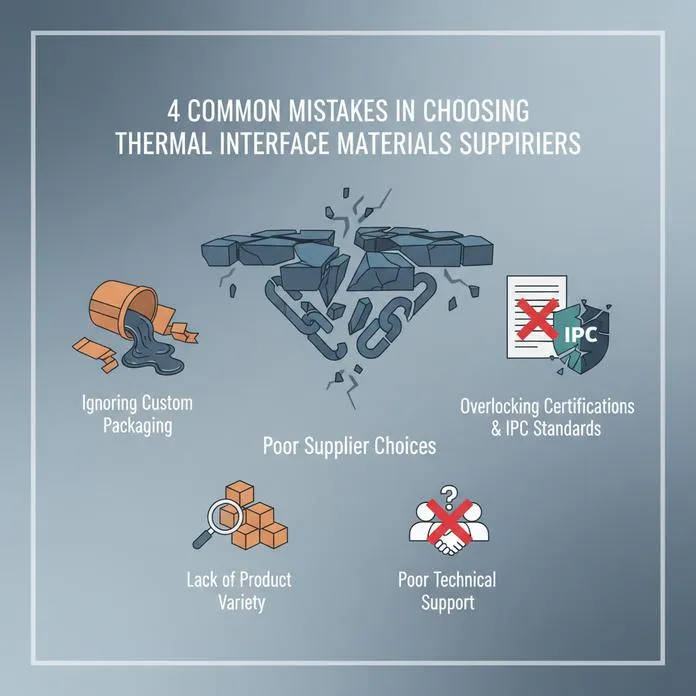
Choosing a thermal interface materials manufacturer isn’t just about specs—it’s about avoiding missteps that cost time, money, and sanity.
Ignoring Custom Packaging: Why It Affects Usability
When you shrug off custom packaging, you’re not just skipping aesthetics—you’re messing with how the product performs in real-world conditions. Here’s why that matters:
- Material handling becomes a mess when packaging isn’t tailored to your setup—think spills, awkward transfers, or damaged goods.
- Lack of proper dispensing methods can cause overapplication or underuse, which kills both performance and consistency.
- Without smart storage solutions, shelf life suffers and material waste skyrockets.
- Non-custom formats often ignore the shape and size needed for automated or manual application tools, reducing overall application efficiency.
- Poor packaging increases labor costs because workers spend more time prepping instead of applying.
- Inefficient containers lead to more leftover product—hello unnecessary waste.
- And let’s not forget usability—if your team struggles to open it or apply it right, expect errors.
So yeah, packaging isn’t fluff. For any serious buyer working with a thermal interface materials manufacturer, it’s part of the performance equation.
Overlooking Certifications: The Role of IPC Standards
Skipping out on checking for certifications? That’s like hiring someone without even glancing at their resume. Here’s what you risk:
- No compliance with critical IPC standards means you’re flying blind on quality assurance. These standards exist for a reason—they’re battle-tested benchmarks.
- Without third-party validation, you might be dealing with inconsistent batches that wreck thermal performance across devices.
- A certified supplier is easier to audit and integrate into regulated environments like aerospace or medical electronics.
→ Think about this: certifications aren’t red tape; they’re proof your supplier knows what they’re doing.
• Inconsistent documentation? That’s usually the first sign your supplier doesn’t meet standard industry requirements. • Materials lacking certification may compromise long-term device reliability—a risk no OEM wants to take. • Vetting suppliers based on their compliance history saves headaches later when things scale up.
Bottom line? If your chosen thermal interface materials manufacturer can’t show valid credentials aligned with global IPC norms, keep walking. Quality and trust start there—and nowhere else.
Understanding Thermal Interface Material Specifications
This one’s your cheat sheet for making sense of the specs that matter when choosing thermal interface materials—no fluff, just what actually counts.
Breaking Down Thermal Conductivity Ratings
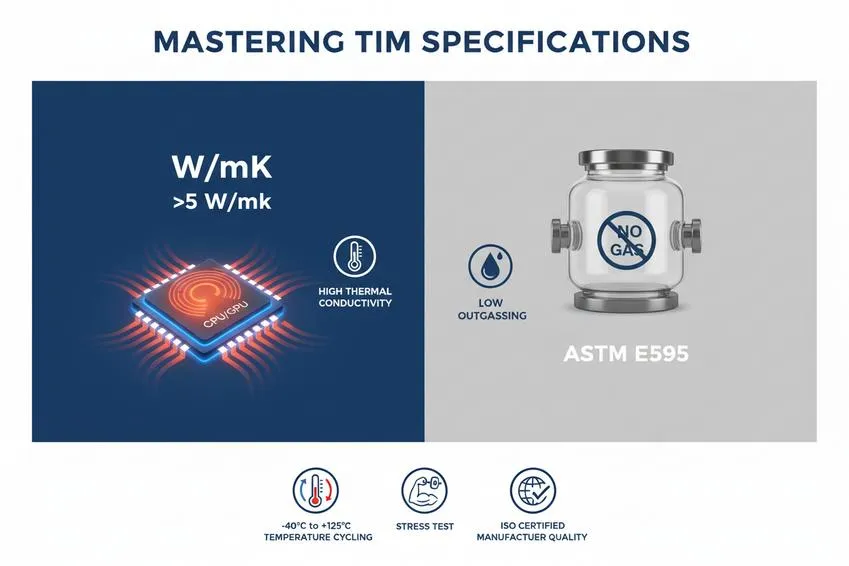
• Thermal conductivity is measured in W/mK—watts per meter-kelvin—, and it tells you how fast heat moves through a material. The higher the number, the better it is at moving heat away from components like CPUs or GPUs.
• Don’t just chase high numbers, though. A 12 W/mK paste might sound great, but if your application doesn’t need that much, you’re overpaying for no reason.
• Also consider how consistent the performance is over time and under pressure—some materials degrade or shift after repeated heating cycles.
If you’re working with a thermal interface materials manufacturer, ask for performance curves or aging data to see how their product holds up long-term.
The Significance of Low Outgassing in Applications
- In vacuum environments like satellites or high-end optical systems, even tiny amounts of gas released from materials can cause huge contamination problems.
- That’s where low outgassing becomes critical—it ensures minimal release of volatile particles under heat and vacuum.
- This spec affects both system reliability and sensor accuracy, especially in aerospace and cleanroom settings.
- Always check ASTM E595 compliance; it’s a standard many top-tier manufacturers follow to certify low-outgassing behavior.
A trusted thermal interface materials manufacturer should be able to provide these certifications upfront without hesitation.
Different Applications: How Properties Vary for CPUs and GPUs
✔️ For CPUs: They often have smaller die sizes but higher contact pressures due to mounting systems. So the TIM needs excellent surface wetting and moderate viscosity to fill micro-gaps effectively.
✔️ For GPUs: These chips are bigger with varying mounting pressures across their surface area. You’ll want something with good spreadability and stable thickness under compression.
✔️ Don’t forget about power density differences—GPUs may run cooler on average but spike harder during load bursts, demanding rapid thermal response from your material.
✔️ Some TIMs are tailored specifically for CPU use cases while others are optimized for GPU cooling pads—ask your thermal interface materials manufacturer which they recommend based on your setup.
Choosing Materials Based on Performance Needs
You’ve got multiple factors at play:
– Need high heat transfer? Go for something with higher thermal conductivity, preferably above 5 W/mK. – Want long-term stability? Look at creep resistance and pump-out prevention properties. – Working near optics or sensors? Prioritize ultra-low outgassing, especially if you’re operating in sealed enclosures. – Budget-sensitive project? Balance price per gram against actual thermal gain—you might not need the most premium option.
A good rule of thumb: Match the TIM’s strengths to what matters most in your use case—not all specs carry equal weight every time you build a rig or design hardware integration.
What Makes a Good Match Between Material & Application?
Short bits to keep in mind:
→ High-performance gaming rigs = Prioritize thermal flow + mechanical stability → Industrial automation boards = Consistent temperature tolerance > peak transfer rates → Aerospace electronics = Absolute must: low volatility + proven reliability under temp swings
Different applications call for different blends of characteristics—and any serious thermal interface materials manufacturer knows this well enough to guide you accordingly.
How Testing Methods Reveal Real-world Reliability
Step 1: Check baseline conductivity using industry standards like ASTM D5470—that gives you apples-to-apples comparisons across products.
Step 2: Look at how the material behaves during temperature cycling tests (-40°C to +125°C). This simulates real-world stress far better than static values alone do.
Step 3: Evaluate mechanical resilience under vibration or shock loads; especially important if your device moves around a lot or sits inside vehicles/heavy machinery setups.
Step 4: Lastly, test adhesion strength after aging—it tells you whether the bond stays tight over months/years of operation without reapplication needs creeping up unexpectedly.
Any reliable thermal interface materials manufacturer should have test reports ready that show these metrics clearly laid out—don’t settle for vague claims!
Matching Specifications with Manufacturer Capabilities
Grouped insight by focus areas:
■ Technical Fit:
- Does their product line cover both pad-based and grease-based solutions?
- Are they offering customizable thicknesses/material blends?
■ Quality Assurance:
- Do they follow ISO-certified production processes?
- Are third-party lab results available?
■ Support & Documentation:
- Can they help match specs directly to your component list?
- Do they offer datasheets with detailed breakdowns, including mechanical tolerances?
When evaluating any potential partner as your go-to thermal interface materials manufacturer, dig into both their technical depth and operational transparency—it’s not just about what they sell but how well they support it post-sale too.
Customer Support: A Key Factor in Supplier Selection
Choosing the right supplier goes way beyond price tags—support systems can make or break your production line.
Testing Instruments: Importance for Quality Assurance
- Suppliers worth their salt always rely on testing equipment to check incoming materials.
- Without proper measurement tools, even top-tier products can fail unexpectedly.
- Routine performance testing ensures consistency batch after batch.
- If you’re working with a new thermal interface materials manufacturer, ask them how they validate their stock.
- Do they use industry-standard quality control metrics? That’s your baseline for trust.
- Are their instruments calibrated regularly? That’s non-negotiable.
• Don’t assume all suppliers meet the same bar—some cut corners on product validation, and it shows later in failed devices.
A solid supplier integrates rigorous reliability checks, not just to pass audits, but because they know that every spec matters when thermal performance is on the line.
Short bursts of poor quality can ruin entire production runs. That’s why a dependable thermal material partner should be obsessed with precision—and equipped with high-end testing rigs to prove it every time.
If your supplier doesn’t talk about their testing protocols upfront, that’s a red flag waving hard. On the flip side, those who flaunt their ISO certifications and show off detailed reports? Keep them close—they get it.
Training on Dispensing Equipment: Why It’s Essential
- No matter how elite your paste or pad is, if it’s applied wrong, you’re toast.
- Poor technique leads to voids, misalignment, and wasted product—not to mention downtime.
- Proper operator training solves most of these headaches before they start.
- Ask whether your thermal interface materials manufacturer offers hands-on demos or remote guidance.
- Do technicians get schooled in actual machine settings?
- Are there follow-ups after installation?
• Many manufacturers overlook the need for training on dispensing techniques, assuming users will just “figure it out.” But that usually backfires hard.
Well-trained teams make fewer mistakes, waste less material, and hit specs faster—which means smoother operations and happier clients downstream.
Here’s what good support looks like: onboarding sessions with real-time feedback; access to updated manuals; quick answers when things go sideways; clear instructions around maintenance intervals and safety steps—all part of smart supplier service packages focused on long-term success over short-term sales wins.
When choosing among thermal suppliers, don’t just ask about product specs—ask what kind of backup comes with it. Because if something jams mid-production and no one picks up the phone? You’ll wish you’d picked better support from day one.
Long-Term Partnership: Picking the Right Thermal Interface Materials Manufacturer
Finding a solid thermal interface materials manufacturer isn’t just about specs—it’s about trust, fit, and long-term value. Let’s break down what really matters.
Industry Experience: Automotive Electronics vs. Consumer Electronics
Choosing a thermal interface materials manufacturer with the right background can make or break your application success.
- Automotive electronics demand high heat resistance, vibration tolerance, and strict compliance with manufacturing standards like IATF16949.
- In contrast, consumer electronics prioritize miniaturization, fast production cycles, and cost efficiency.
- A supplier who understands your specific application requirements—whether it’s EV battery packs or smartphones—will deliver better results.
- Look into their track record across different market segments, especially those matching your product’s expected lifecycle.
- Ask how they adapt materials to meet evolving industry trends—because standards shift fast in both sectors.
Collaboration Ease: Assessing Communication and Responsiveness
A good tech fit means nothing if the people behind it aren’t responsive. Here’s what to look for:
• Do they have clear communication channels, or are you stuck chasing emails? • How fast is their reaction time when issues pop up? That says a lot about their internal processes. • Can they offer real-time updates via shared platforms or other modern collaboration tools?
Also consider: – Whether there’s a consistent project lead managing the relationship; strong project management avoids missteps. – If feedback loops are part of their workflow, do they adjust based on your input?
Solid partnerships are built on proactive support and mutual respect—not just data sheets.
Reliability Over Time: Evaluating Vendor Commitment
Let’s be honest—no one wants to swap out suppliers mid-project because someone flaked out.
Many buyers overlook this part until it’s too late:
• Is there a formal plan for ongoing quality checks tied to clear-cut performance metrics? • What does their post-sale approach look like—is there actual follow-through or just silence after delivery?
Long-term confidence comes from more than promises: – Consistent delivery timelines show real control over their own supply chain. That means stronger supply chain stability, fewer surprises for you. – A commitment to continuous upgrades signals dedication—not stagnation.
If you’re looking at this as a multi-year deal—and most do—you need a partner who treats it like more than another order.
Strategic alignment matters here too; if they’re investing in R&D alongside you, that’s not just service—it’s a true strategic partnership.
FAQs about Thermal Interface Materials Manufacturer
How do I identify a trustworthy thermal interface materials manufacturer for demanding industries?
A strong partner shows commitment beyond delivery:
– History in Automotive Electronics, Aerospace Systems, and Industrial Automation.
– Ability to produce precise mixes—Thermal Paste, Epoxy Adhesives, and high-flow Gap Fillers refined by modern Mixing Machines.
– Independent checks using calibrated Testing Instruments under real operating stress cycles.
Such manufacturers act less like vendors, more like co-engineers protecting product performance with quiet confidence.
Why is electrical insulation vital in thermal materials used across sensitive electronic applications?
An unseen guardian—electrical insulation prevents micro sparking among compact circuits inside CPU coolers, delicate boards, or soaring power semiconductors in aircraft systems.
• High-grade compounds preserve circuit integrity while offering stable heat spread via refined conductivity pathways.
• Tested under dual requirements of safety (UL Flammability) and substance limits (RoHS Compliance, REACH Certification), keeping tomorrow’s machines safe today.
What makes high-reliability grease compounds stand apart from everyday formulations?
They endure: Temperature shifts test every bond yet these greases remain composed through thousands of power cycles in GPUs or LED assemblies.
1️⃣ Resist breakdown with tight control over oil separation at extreme zones up to 180°C operating range.
2️⃣ Exhibit superior stability monitored by automatic profiles within precision-controlled ovens and iterative screening per IPC Standards / MIL-SPEC Standards benchmarks.
3️⃣ Build long-term trust—the mechanical quiet between device layers carries years of reliability without visible aging signs.
How can packaging strategy affect efficiency on high-volume production lines?
Short description + multi-column table data
| Packaging Type | Common Use Case | Human Advantage |
|---|---|---|
| Syringe Applicators | Spot-dispensing of epoxy into small CPU units | Clean handling & accurate amount control |
| Bulk Containers | Continuous use with automated mixing & curing oven feed systems | Fewer refills; reduced downtime |
| Pre-cut Shapes / Roll Forms | Sheet bonding for GPU heat sinks, telecom routers | Quick setup; uniform pad placement |
Custom shapes tailored to each project help operators move faster while caring for precision—a subtle but powerful rhythm when every second counts on the assembly floor managed by experienced technicians working beside humming dispensing equipment lines.