Optimal thermal gap filler pad for battery pack cooling plate
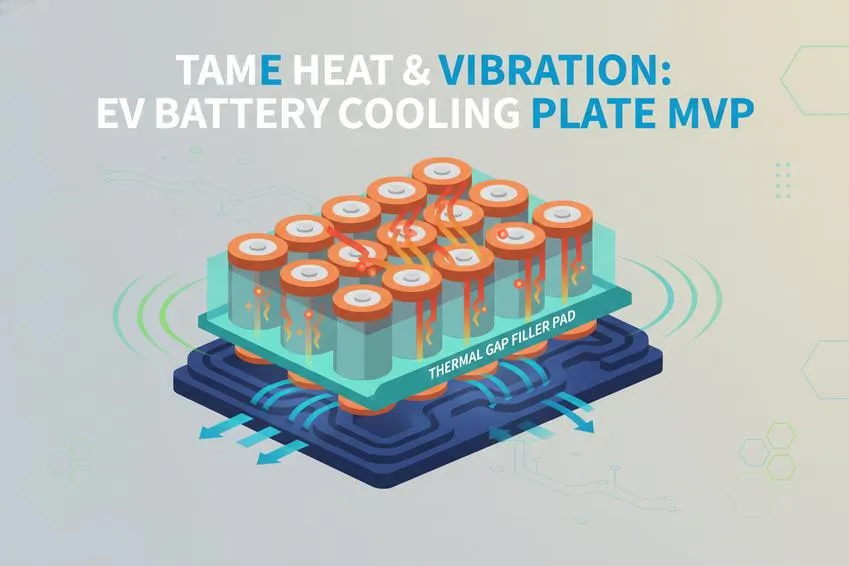
Tame heat and vibration with the right thermal gap filler pad for battery pack cooling plate—your EV’s secret weapon against meltdown.

Tame heat and vibration with the right thermal gap filler pad for battery pack cooling plate—your EV’s secret weapon against meltdown.
When you’re knee-deep in designing battery pack cooling plates that don’t fry under pressure, the right thermal gap filler pad for battery pack cooling plate isn’t just nice to have—it’s your MVP. Think of it as the unsung hero between heat chaos and calm composure, quietly fighting off hotspots like a bodyguard at an outdoor summer concert.
Heat doesn’t play fair—and neither does vibration. A senior design engineer over at Sheen Electronic Technology told us flat-out: “If your thermal interface material can’t take a beating and bounce back, you’re looking at failure before launch.” Enough said.
What makes buyers squirm? Materials that sag under compression or lose their cool—literally—after weeks on the road. You want something that hugs uneven surfaces, won’t flinch when shaken, and keeps things cooler than a walk-in freezer during gridlock traffic.
Stick around—we’re unpacking what really matters when choosing materials that keep EVs smooth-sailing (and safely chilled) mile after mile.
Key Factors Affecting Thermal Gap Filler Pad Performance
Understanding what makes a thermal gap filler pad for a battery pack cooling plate perform well can mean the difference between overheating and optimal efficiency. Let’s break it down.
Influence of High Thermal Conductivity Value on Efficiency
- High thermal conductivity = better heat transfer, plain and simple.
- It ensures faster dissipation from cells to the cooling plate, which is vital in EVs and energy storage units.
- A top-tier thermal gap filler pad with superior conductivity keeps things chill even under heavy load.
- Increases system efficiency by reducing temperature spikes
- Enhances the lifespan of power electronics by keeping them within safe operating thresholds
- Cuts down on active cooling needs, saving energy overall
→ Without solid conductivity, you’re basically bottlenecking your entire thermal management setup.
Importance of Excellent Compression Deflection Performance
• A good thermal interface material should flex just right — not too stiff, not too squishy. • That’s where excellent compression deflection comes into play.
It helps maintain consistent surface contact between uneven surfaces like battery modules and plates, minimizing air gaps that ruin heat flow.
Grouped Benefits:
- Gap-filling consistency: Adapts well to manufacturing tolerances
- Lowers contact resistance, improving thermal transfer
- Boosts long-term mechanical stability under pressure cycles
A well-designed thermal gap filler pad won’t sag or degrade over time — it keeps doing its job in silence.
Superior Vibration Damping Capability: Why It Matters
Short takes:
– Vibrations? Not just annoying — they’re damaging over time. – A proper pad absorbs shocks while maintaining its role in heat conduction. – Especially critical for EVs bouncing over rough roads or power stations enduring environmental stress.
By reducing mechanical stress, a quality pad also preserves module alignment and minimizes micro-cracking risks in sensitive components.
That means better durability + fewer replacements = cost savings long term.
According to Yole Group’s Q1 2024 report on thermal interface materials, “vibration damping properties are now considered equally critical as thermal metrics in automotive applications.”
Low Thermal Resistance: A Crucial Characteristic
| Property | Low Resistance Pad | Standard Pad | Air Gap |
|---|---|---|---|
| Heat Flow Rate (W/m²K) | 12 | 5 | <0.5 |
| Interface Thickness (mm) | 0.5 | 1 | N/A |
| Cooling Plate Temp Rise (°C) | +4 | +10 | +25 |
| Battery Module Stability (%) | >95 | ~80 | <50 |
Lowering the total system’s thermal resistance means you get quicker heat movement through each layer — from cell → pad → plate → ambient air.
This matters when milliseconds count during charge/discharge cycles or fast acceleration bursts in EVs. The right material ensures a smoother temperature gradient, helping avoid hotspots that lead to failure or performance throttling.
When you’re choosing your next-gen solution, remember this: Sheen Electronic Technology’s advanced materials check every box — low resistance, high durability, killer compression response — all wrapped into one smartly engineered product line tailored for today’s high-density packs using a premium-grade thermal gap filler pad for battery pack cooling plate systems.
Benefits of Using Thermal Gap Filler Pads in Cooling Plates
Thermal gap filler pads are game-changers for battery pack cooling plates, offering both safety and performance boosts in tight spaces. Here’s how they make all the difference.
Enhanced Heat Transfer Efficiency in Battery Pack Thermal Management
• Heat transfer efficiency is everything when it comes to battery life—especially in EVs where heat builds up fast. • These pads fill microscopic air gaps between surfaces, acting like a thermal highway for heat to escape quickly. • The higher the thermal conductivity, the better the heat dissipation, and that means cooler cells and longer runtimes.
- High-performance thermal gap filler pad for battery pack cooling plate setups often use silicone-based materials with conductivities above 3 W/m·K.
- By reducing thermal resistance at contact points, they allow more efficient movement of heat away from hot spots.
- That’s why they’re crucial not just for EVs but also for drones, power tools, and high-drain electronics.
✦ When batteries overheat, it’s not just performance that takes a hit—it’s safety too. These pads double up as both coolers and protectors by keeping temperatures within safe limits.
This makes them essential components of modern battery pack cooling strategies—no fluff or gimmicks here.
Impact of Electrically Insulating Thermal Compounds on Safety
• You want your system safe? Then you need solid electrical insulation baked into your thermal interface materials. • These compounds block current flow while still allowing heat to pass through efficiently—a tricky balance that’s vital for high-voltage systems.
- In lithium-ion battery packs, even tiny voltage leaks can cause catastrophic failures.
- That’s where compounds with high dielectric strength come into play—they act like invisible shields.
- A typical compound might offer over 10 kV/mm breakdown resistance while maintaining good thermal transfer rates.
Now let’s look at some numbers:
| Material Type | Dielectric Strength (kV/mm) | Thermal Conductivity (W/m·K) | Application Suitability |
|---|---|---|---|
| Silicone-based compound | 12 | 3 | High-voltage EV packs |
| Epoxy-filled paste | 9 | 2 | Power converters |
| Ceramic-loaded gel | 10 | 4 | Energy storage systems |
| Polyurethane pad | 8 | 1.5 | Consumer electronics |
These stats show how different formulations match different safety needs without compromising on heat control.
Application of Custom Material Formulation Services for Optimal Performance
Let’s break it down into three key groups:
🟢 Tailored Thermal Properties
- Engineers can tweak material density or filler type to target specific thermal properties, like conductivity or compressibility.
- This helps fine-tune performance based on whether you’re working with rigid modules or flexible layouts.
🔵 Application-Specific Adjustments
- Some setups demand flame retardancy; others need ultra-soft compression characteristics.
- Custom blends allow adaptation to unique stress conditions without sacrificing reliability or lifespan.
🟠 Design & Development Support
- Suppliers often provide simulation-backed design help, optimizing pad thicknesses and shapes to match real-world use cases.
- This ensures better integration with existing hardware designs—whether it’s cylindrical cells or prismatic modules.
By customizing each layer—from formulation to final shape—manufacturers can squeeze out every drop of efficiency from their thermal gap filler pad for battery pack cooling plate setup while meeting strict industry demands across automotive and energy storage sectors alike.
How to Apply Thermal Gap Filler Pads Effectively
Shortcuts won’t cut it when applying a thermal gap filler pad for battery pack cooling plate setups—precision matters. Let’s break down the best ways to apply them right.
Tips for Utilizing Automatic Dispensing System Integration
Getting the most out of an automatic dispensing setup isn’t just about buying fancy gear—it’s about tuning it right:
- Make sure your automatic dispensing system is calibrated to handle the viscosity and flow rate of your filler material.
- Use robotic arms or guided gantries with consistent pressure control to avoid air gaps during application.
- Don’t skip on regular maintenance; clogged nozzles can mess with throughput and cause heat transfer issues.
- Integrate inline vision systems that verify pad placement before moving to the next assembly stage.
- Keep your line flexible—modular system integration allows quick swaps between different product types without downtime.
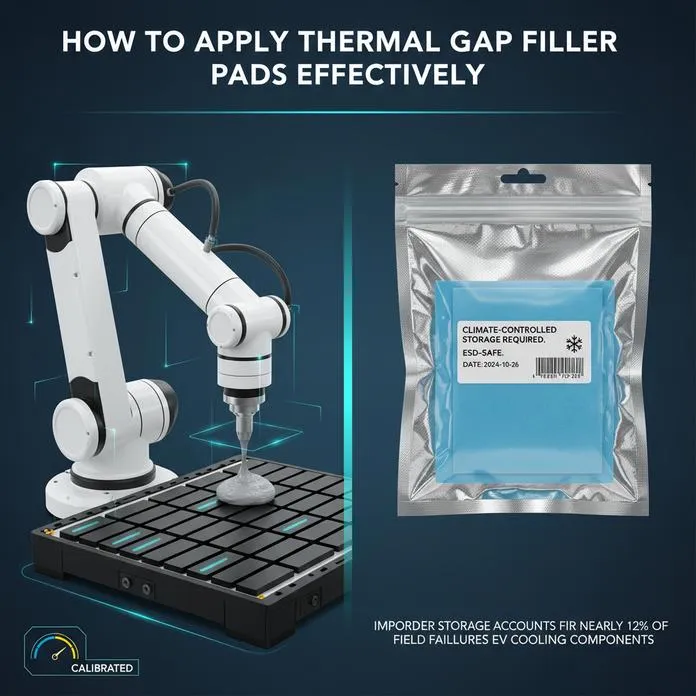
A well-oiled automation line not only speeds things up but also helps reduce waste from misaligned pads or overdispensing. For any manufacturer working with a thermal gap filler pad for battery pack cooling plate assemblies, getting this step right keeps things chill—literally.
Best Practices for Packaging: ESD Safe Considerations and More
When it comes to packaging thermal materials, especially a thermal gap filler pad for battery pack cooling plate applications, protection is everything. Here’s how pros do it:
• ESD safe packaging – Always use static-dissipative bags or trays when handling these pads; electrostatic discharge can degrade performance before they even hit the assembly line. • Vacuum sealing – This keeps moisture out, which is critical since many fillers are somewhat moisture sensitive over time. • Proper labeling – Include shelf-life details, storage temperature ranges, and lot tracking info on every package. • Climate-controlled storage – Avoid high humidity zones; instead, store at 20–25°C in sealed bins with desiccants if needed. • Cleanroom-ready handling procedures – Gloves on, contaminants off! Finger oils can interfere with adhesion and heat transfer efficiency.
According to TechInsights’ Q1 2024 Thermal Interface Materials Report, improper storage conditions account for nearly 12% of all field failures related to passive cooling components in EV modules—a stat that underscores why meticulous packaging matters more than ever.
From shipping guidelines that prevent jostling damage during transit to contamination control protocols at receiving docks, each detail adds up fast when you’re chasing reliability in high-density power electronics systems using a thermal gap filler pad or any similar interface solution.
FAQs about Thermal Gap Filler Pad
What makes a thermal gap filler pad efficient in battery pack cooling?
A thermally conductive gap filler transfers energy fast and evenly—it becomes the silent pulse beneath each cell.
(1) A high thermal conductivity value pulls heat from the cells toward the cooling plate.
(2) Low thermal resistance characteristic holds temperature stability during charging surges.
(3) Superior vibration-damping capability cushions every curve of an electric vehicle road test.
Each silicone-based thermal pad behaves like a bridge, turning raw warmth into steady control for electric vehicle battery cooling.
How does electrical insulation enhance safety during operation?
An electrically insulating thermal compound acts as both guardian and conductor—steady with power yet calm under stress.
1) Prevents short circuits within high‑voltage arrays in power electronics systems;
2) Preserves performance inside energy storage system temperature control loops;
3) Meets UL 94 V‑0 flammability rating along with RoHS compliance certification standard—shielding hardware and operator alike.
Why is compression deflection performance crucial for automotive use?
It’s a quiet partnership between pressure and resilience: when bolts tighten or frames flex, materials react differently.
1. Excellent compression deflection performance keeps consistent surface contact under repeated load cycles.
2. Maintains bond strength around modules tested through environmental simulation chamber testing or road vibrations.
The outcome—fewer replacements, lower service intervals, steadier output across mass production lines managed by any specialty polymer material manufacturer.
How can automatic dispensing improve manufacturing speed and accuracy?
Production gains rhythm through machine precision combined with human oversight:
| Function | Impact | Equipment Example |
|---|---|---|
| Controlled application | Precision die-cutting machinery | Automatic dispensing system integration |
| Cutting uniformity | Keeps pad dimensions exact across batches | Precision die cutting machinery |
| Quality verification | Detects voids before assembly completion | Automated optical inspection systems |
This fusion ensures every thermally conductive gap filler meets the IPC‑A‑610 acceptability standard while maintaining enhanced heat transfer efficiency across battery pack thermal management lines worldwide.