
Consumer ElectronicsThermal Materials & Stack-up Support
Air gaps between hot components and heatsinks act as an insulator (air ~0.026 W/m·K).
Sheen TIMs fill micro-gaps, reduce interface resistance, and stabilize device performance.
Sheen TIMs fill micro-gaps, reduce interface resistance, and stabilize device performance.
Typical Thermal Challenges in Compact Devices
Hotspots
on SoC/CPU/GPU/PMIC under tight Z-height and limited heatsink volume.
Tolerance stack-up and height differences requiring compliant pads or dispensable gels.
Production constraints (rework, cleanliness, automation, yield) in high-volume assembly.
Tip: Share your gap (min/max), power map, and target temperatures. We will recommend material type, conductivity range, thickness window, and a sample plan.
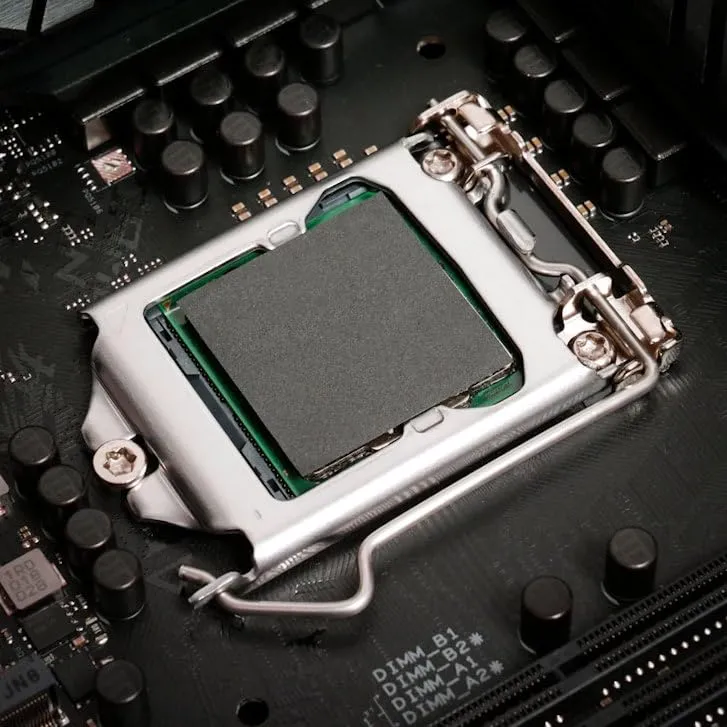
Fig 1.0 — Compact Devices
Where Sheen TIMs Are Used
Typical consumer electronics interfaces that benefit from air-gap elimination and stable thermal contact.
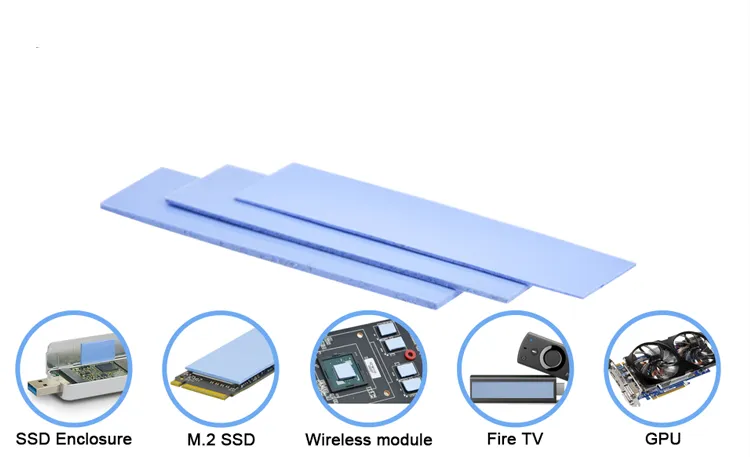
Smartphones
Processor/shield can / power stages. Gels help handle chip height differences and reduce assembly stress.
Laptops & Handhelds
CPU/GPU thermal modules. PCM and thin interfaces enhance wetting and reduce thermal resistance at operating temperatures.
Routers & Networking
SoC and power modules. Pads provide stable thickness and fast placement in production.
SSD & Storage
Controller/NAND coupling. Pads support consistent contact and reliability for compact enclosures.
Consumer Electronics
Choose based on gap, pressure, and silicone restriction.
and production method (placement vs dispensing/printing).
and production method (placement vs dispensing/printing).
Typical Stack-up Examples
Use these as starting points. Final selection should consider gap distribution, pressure, and target temperatures.
Reference Matrix
| Interface | Recommended Material | Engineering Notes |
|---|---|---|
| SoC → Vapor chamber/heatsink | PCM / Thin Pad | Prioritize low thermal resistance; confirm contact pressure & flatness. |
| PMIC / RF module → shield/frame | Soft Pad / Gel | Manage tolerance stack; avoid over-compression damage. |
| Small module bonding | Thermal Tape / Adhesive | Choose reworkable tape vs permanent adhesive based on service strategy. |
| Battery / charging IC → chassis | Pad / Gel | Consider cycling reliability; validate at sustained load. |
NDA available. We can share TDS, compliance declarations, and a sample plan after your request.
Validation Checklist
A simple, repeatable approach for engineering qualification. Keep documentation consistent for procurement review.
What are the customs of the Japanese people?
Etiam erat velit scelerisque in dictum non consectetur. Nisl purus in mollis nunc sed id semper. Cras fermentum odio eu feugiat pretium nibh ipsum.
Gap Mapping & Tolerance
Measure the minimum and maximum gaps across units. Select compliance/hardness to cover real distribution, not nominal values.
Thermal Performance
Validate junction/case temperatures at sustained load. Watch for interface pumping or contact loss over time.
Reliability (Cycling & Aging)
Run thermal cycling, storage, and long-duration stress as needed. Confirm stable contact and no excessive migration.
Process & Assembly Yield
Confirm placement, cleanliness, rework, and automation suitability. Define a QC plan for incoming inspection.
Process & Assembly Yield
Etiam erat velit scelerisque in dictum non consectetur. Nisl purus in mollis nunc sed id semper. Cras fermentum odio eu feugiat pretium nibh ipsum.
Ready to optimize your consumer electronics thermal stack-up?
Send gap, power, and target temperatures. We’ll respond within 24 hours (business days) with recommended materials and next steps.
Consumer Electronics
Application Field
Consumer Electronics Thermal Materials & Stack-up Support
Thermal pads, gels, tapes, adhesives, and PCM for compact devices. Reduce hotspots, stabilize performance, and accelerate validation with engineering-ready recommendations.